


Why Costa Rica Doesn't Issue Real Gambling Licenses

We have paid partnerships with the online casino operators featured on our site. We may also earn commissions when users click on certain links. However, these partnerships do not affect our reviews, recommendations, or analysis. We remain impartial and committed to delivering unbiased gambling content.
Learn moreHave you ever spotted the phrase licensed in Costa Rica in an online casino’s footer and assumed it meant safety? In reality, what’s behind it is just a local business registration, not a gambling license verified by any authority. Below, we explain the difference and what to watch for before you deposit your money.
- The Core Myth: What a Costa Rica License Actually Is
- Costa Rica’s Business Registration vs. a Genuine Gambling License
- Why Casinos Use the Costa Rica License Claim
- The Player Protection Reality
- Red Flags to Watch For
- Why Costa Rica Became an Operating Hub
- What to Do If a Casino Claims a Costa Rica License
- The Bottom Line for Players
- How We Verified This
The Core Myth: What a Costa Rica License Actually Is
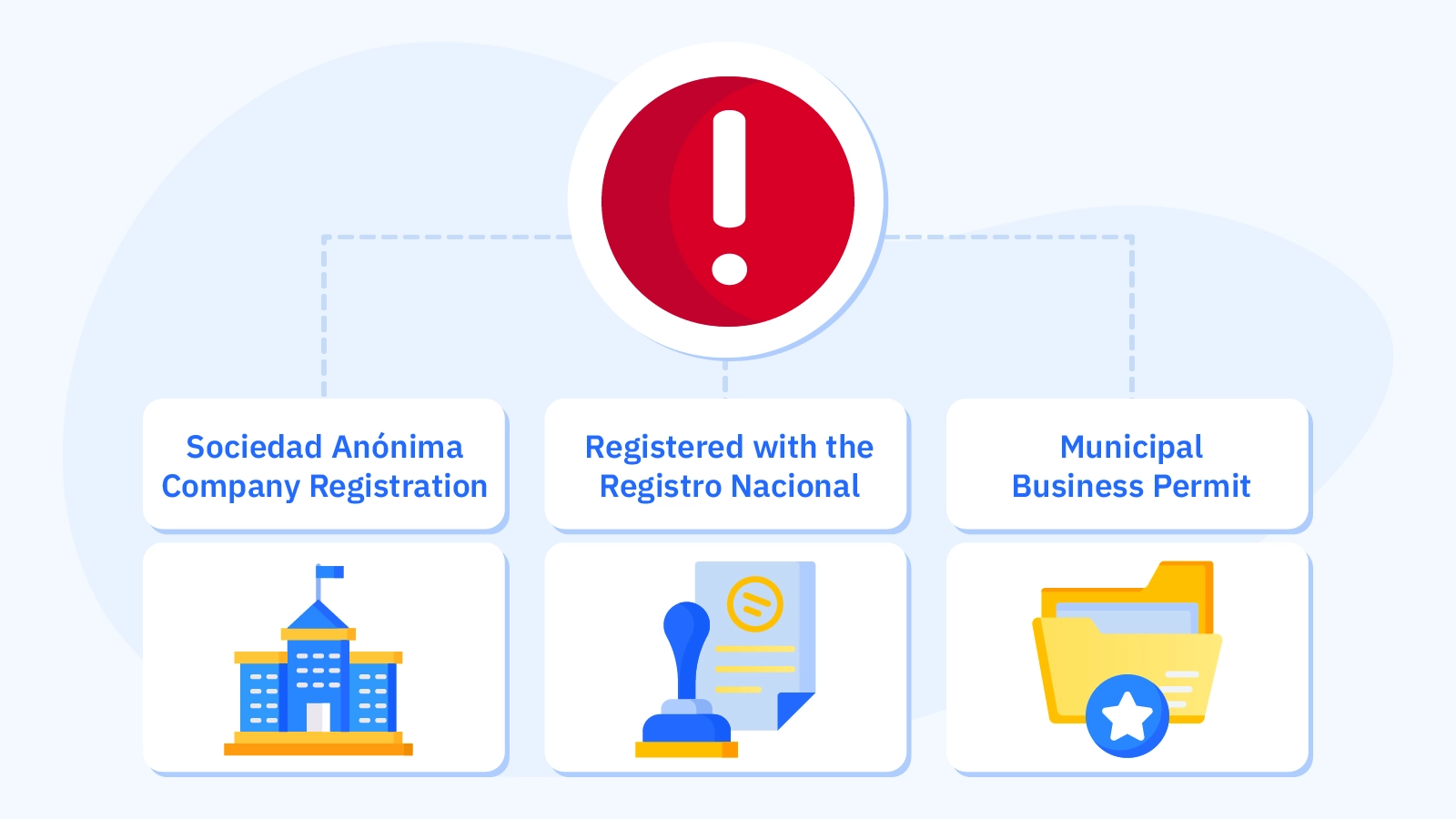
When an operator claims to hold a gambling licence issued in Costa Rica, what actually stands behind that claim is a Costa Rican company. More specifically, a sociedad anónima, registered with the Registro Nacional, holding a municipal business permit.
This permit is often filed under a business category such as data processing or even IT services. It doesn’t fall under a category directly tied to gambling, for the simple reason that no such category exists in the country’s legislation.
This allows the company to operate legally, but there’s no government authority evaluating the fairness of the games or the safety of your funds as a player. On top of that, there are no responsible gambling options or a way to resolve disputes. Currently, Costa Rica doesn’t apply specific rules to companies that serve players outside the country.
Costa Rica’s Business Registration vs. a Genuine Gambling License
On paper, the two can sound the same, but the differences are major. Most players only find this out after running into a problem while trying to withdraw their winnings. We don’t want that to happen to you, at CasinoAlpha, we check an operator’s licensing status as part of our standard review process, which is exactly why we’ve put together a table with the most important differences!
| Costa Rica Registration | Real Gambling License | |
|---|---|---|
| Who signs off on it | A town hall and a business registry | A specialized regulator, like the MGA or Isle of Man’s GSC |
| What gets checked | Paperwork and a tax category | Game fairness (RNG), company finances, AML, segregated player funds |
| After you sign up | Nobody’s watching | Audits, compliance reports, renewal conditions |
| If something goes wrong | You’re on your own | You can file a formal complaint |
| Who’s allowed to play | Players outside Costa Rica only | Whatever the license specifies |
Now that you know the differences, which type of casino would you choose? We’d say the licensed ones are the way to go!
Why Casinos Use the Costa Rica License Claim
For a player who sees Costa Rica and license placed side by side in a site’s footer, it can look reassuring. They might automatically assume that the site they just signed up on is licensed. The reality is different.
For the operator, it costs far less than obtaining an actual licence elsewhere. Setting up a Costa Rican company is cheap and fast, whereas in Malta or the Isle of Man, the process is long and comes with plenty of recurring fees.
There are also honest operators who tell you directly that this is just a business registration, not a gambling licence. However, most players don’t know this distinction, and when they see the phrase licensed in Costa Rica, they automatically assume the operator is licensed by a regulatory authority, following an extensive testing process.
The Player Protection Reality
Since there’s no specific gambling authority overseeing these companies, players aren’t protected in any real way. There’s no regulator certifying game outcomes, tables aren’t independently tested, player deposits aren’t kept in separate accounts, and no official body can help you resolve a problem. On top of that, there’s no licensing authority that can revoke an operator’s right to accept players if it behaves improperly.
Don’t worry, this doesn’t mean every operator registered in Costa Rica is bad, there are casinos that run their business responsibly, even without a regulatory framework in place. Still, from our perspective as specialists in this field, a Costa Rica registration doesn’t give you any real verification of fairness or safety. There are plenty of differences we can point out, compared to a licensed casino, where everything is secure.
Red Flags to Watch For

- Only a Costa Rica gambling licence is mentioned, without a licence number you can actually verify with a regulatory authority.
- The term licence is used, but the government institution that issued it isn’t specified.
- You’re not given a working link to the authority’s public register, so there’s no way to verify the licence.
- There’s no clear information about withdrawal timeframes, dispute resolution procedures, or responsible gambling tools.
- On the site, you’ll find promotional material claiming the platform offers fair gaming, but no recognized independent auditor, such as eCOGRA, is mentioned.
Why Costa Rica Became an Operating Hub
Costa Rica has been a base for offshore gambling operations since the ’90s, when many operators moved here, trying to escape strict regulations elsewhere. For example, companies like BetCRIS and Bodog opened call centers and online sports betting platforms here.
Since then, hundreds of companies in this industry have relocated their data centers and support teams here. San Jose has become a central hub for these kinds of operations. The country offers good telecommunications infrastructure, solid political stability, and a time zone close to the US workforce.
The reasons Costa Rica has remained an attractive option haven’t changed to this day. Setup and operating costs are low, call-center staff speak multiple languages, the government is stable, and, most importantly, there’s no gambling-specific tax or license.
This is possible because there’s no law regulating this industry in Costa Rica. It’s advantageous for operators, since they only pay the standard fees, not the high fees a licensed casino would pay.
What to Do If a Casino Claims a Costa Rica License
We’re not saying every casino registered in Costa Rica is bad, but we do urge you to be careful and run a few extra checks before signing up with an operator.

- Look for a second gambling license, beyond the Costa Rica registration. Many operators registered there also hold a genuine license issued by an established authority. Here are a few examples: Curaçao, Malta, Anjouan, Kahnawake, or the Isle of Man.
- Check the license number directly on the regulator’s public register. Never take the casino’s word for it, it can lie to you!
- Also check whether independent game-fairness testing seals exist. These can be issued by bodies such as iTech Labs, GLI, or eCOGRA.
- If there’s no credential beyond Costa Rica, it’s best to treat the operator as unlicensed. That’s essentially what it means. It’s not safe to play at a casino like that!
The Bottom Line for Players
A Costa Rica gambling licence isn’t proof that an online casino has been verified by a gambling authority. In most cases, it’s just a business registration, filed under a data-processing category. This means the operator isn’t even tested or overseen in any way.
That doesn’t automatically mean every operator registered in Costa Rica is untrustworthy. We recommend that, before making a deposit, you check whether the operator also holds a genuine license issued by a recognized regulatory authority. Also check whether independent game-fairness certifications exist.
Don’t forget to treat gambling strictly as a form of entertainment, and set a budget you can afford to lose.
How We Verified This
To put this article together, the CasinoAlpha team’s analysts carefully reviewed all recent reports on the legislative debate around gambling in Costa Rica. They also checked information on the rejection of Bill 25.057 in January 2026, as well as general guides on the business-registration process.
And they didn’t stop there! Industry reports on how the country became a hub for offshore betting were studied as well. All of this information was packaged in the best possible way and delivered through this article, which we hope will help you make the best decisions!