
Gambling Addiction Help: Signs, Helplines & Treatment

We have paid partnerships with the online casino operators featured on our site. We may also earn commissions when users click on certain links. However, these partnerships do not affect our reviews, recommendations, or analysis. We remain impartial and committed to delivering unbiased gambling content.
Learn moreGambling problems can affect anyone, and they’re far more common than most people realize and they’re treatable. This guide helps you recognize the warning signs and points you to free, confidential help wherever you are.
- Warning Signs: What Problem Gambling Looks Like
- When Should You Seek Help?
- International Helplines & Self-Exclusion at a Glance
- Self-Help Strategies That Actually Help
- Professional Treatment Options
- National Self-Exclusion Systems: One Step, Wide Protection
- If You’re Worried About Someone Else
- What to Do Today
- Sources
Warning Signs: What Problem Gambling Looks Like
Specialists use the DSM-5 criteria to assess gambling disorder. You don’t need to self-diagnose, but you do need to recognise the main patterns. The CasinoAlpha experts have put together a list of the key signs to watch for:
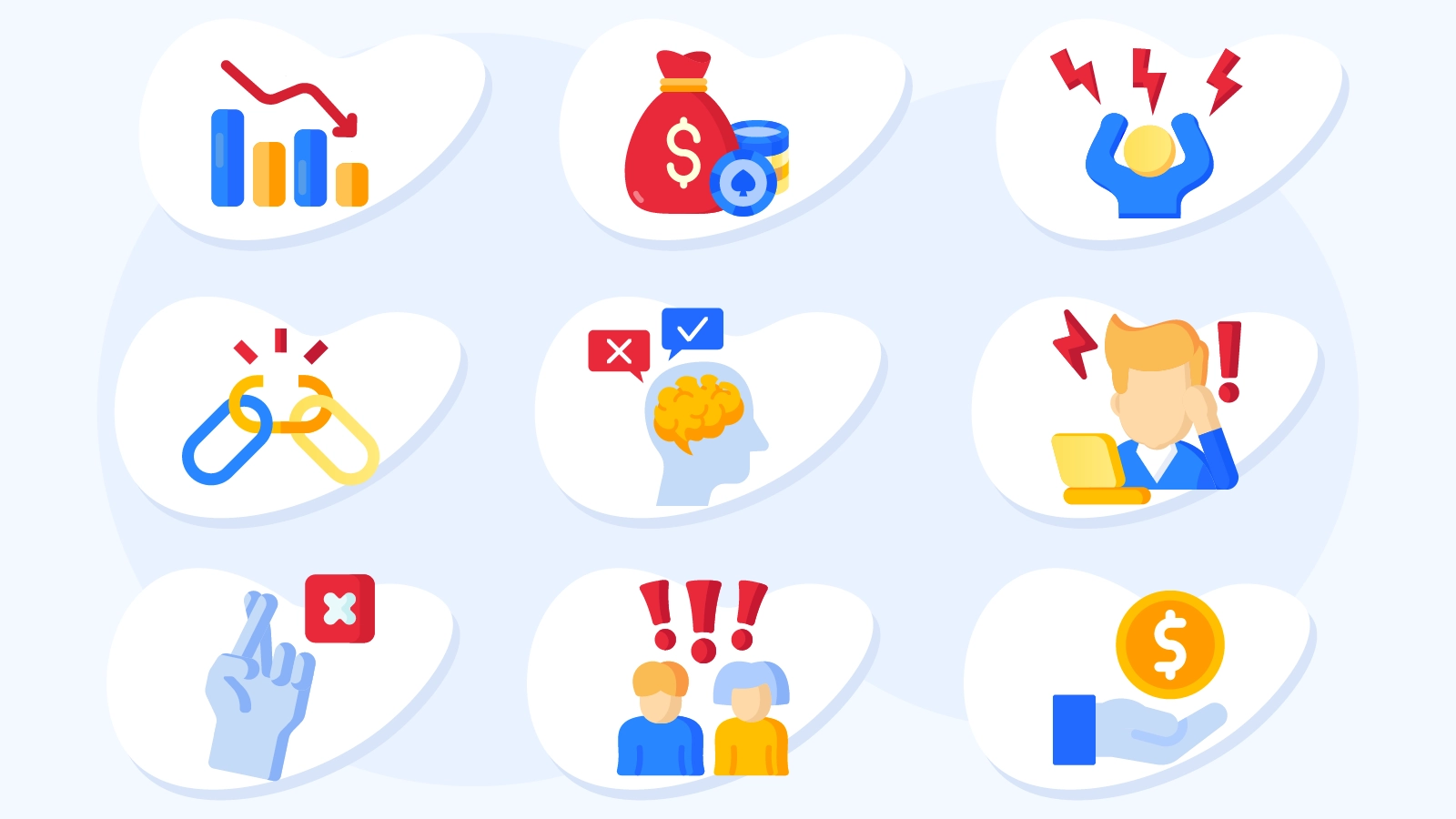
- Chasing losses: You keep going back, trying to win back the money you’ve lost.
- Feeling the need to bet increasingly larger amounts of money.
- Feeling restless when you try to cut back on gambling.
- Having made repeated attempts to stop gambling.
- Being constantly preoccupied with gambling, past bets you’ve placed, or finding money to keep playing.
- Gambling to cope with stress and anxiety.
- Lying to your family and friends to hide how much you gamble.
- Risking losing your relationship or job because of gambling.
- Relying on financial help from others to get out of desperate situations.
When Should You Seek Help?
You don’t have to hit rock bottom before asking for help. On the contrary, the best thing to do is reach out the moment you feel like gambling is starting to slip out of your control. If you start betting money you can’t afford, that’s a clear sign you need help.
Helplines are free and confidential. You can call anytime, even when you’re not sure whether your situation is serious enough. The person on the other end of the line is ready to talk with you and offer you the best advice. Keep in mind that the earlier you ask for help, the easier recovery will be.
Even if you’re not the one directly affected, but you’re worried about your partner or a family member, you can still call the helpline. You’ll get the advice you need there too!
International Helplines & Self-Exclusion at a Glance
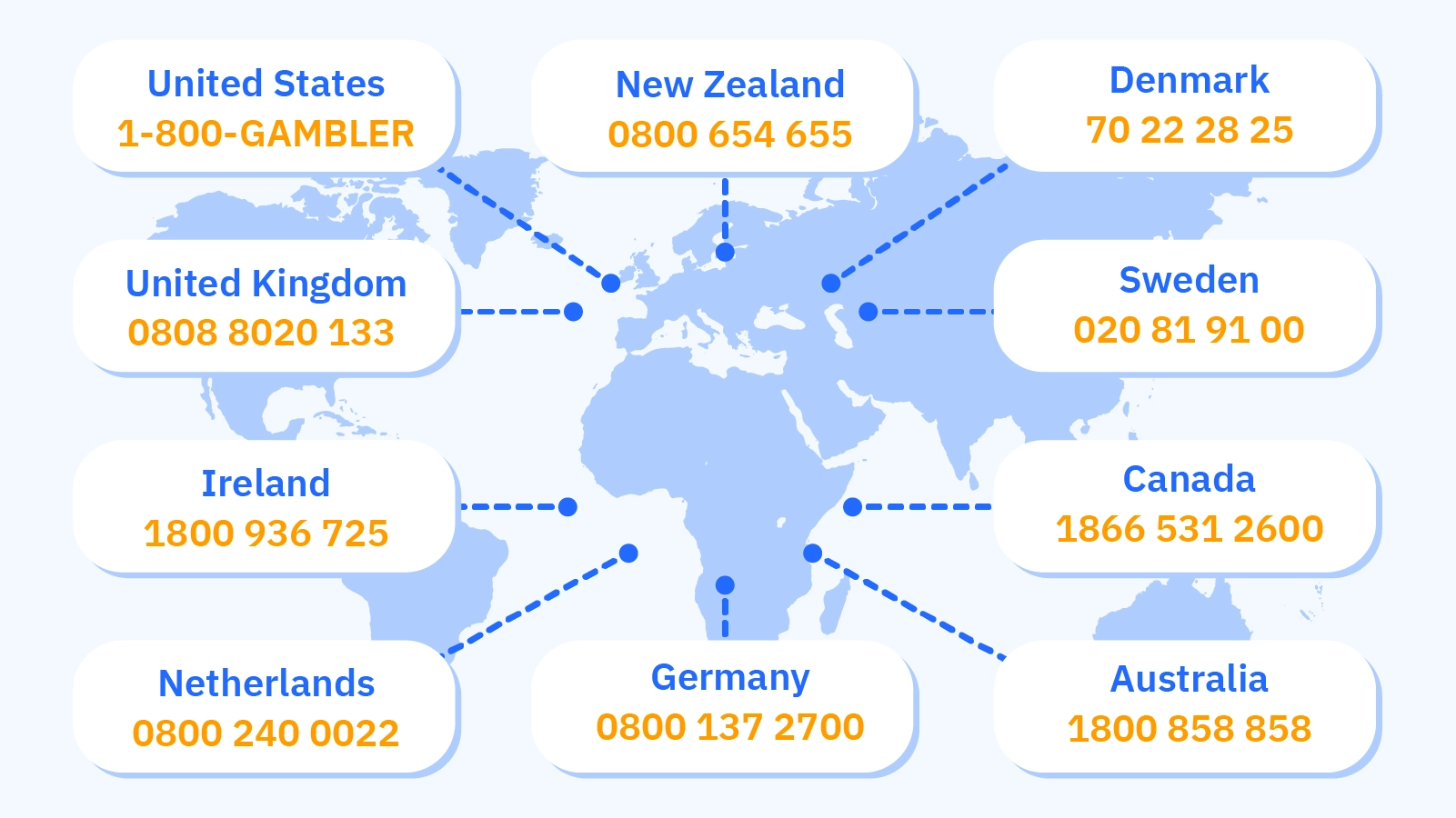
No matter where you are, there’s a free number you can call for help. No cost, no judgment, and 100% confidential. Most of them operate around the clock. If you choose self-exclusion, you’ll be blocked from all gambling sites and venues nationwide. Only one request is needed.
| Where you are | Who to call |
|---|---|
| United States | 1-800-GAMBLER · 1-800-522-4700 · text 800GAM · ncpgambling.org/chat |
| United Kingdom | 0808 8020 133 (GamCare) · begambleaware.org |
| Ireland | 1800 936 725 (GamblingCare.ie) · Gamblers Anonymous Ireland |
| Netherlands | Loket Kansspel / Kansspelautoriteit |
| Germany | BZgA gambling support line |
| Australia | 1800 858 858 (Gambling Help Online) |
| Canada | ConnexOntario 1-866-531-2600 (+ provincial) |
If you’re reading this at 2am wondering whether it’s ‘bad enough’ to call, it’s not too early. That’s exactly what these lines are for.
You don’t have to be in crisis to call. The CasinoAlpha team recommends reaching out to these helplines any time you feel you need support. There, you’ll find people ready to help you, or simply to talk with you about what’s on your mind.
Self-Help Strategies That Actually Help
Alongside professional support, here are a few practical steps you can put into action to regain control:
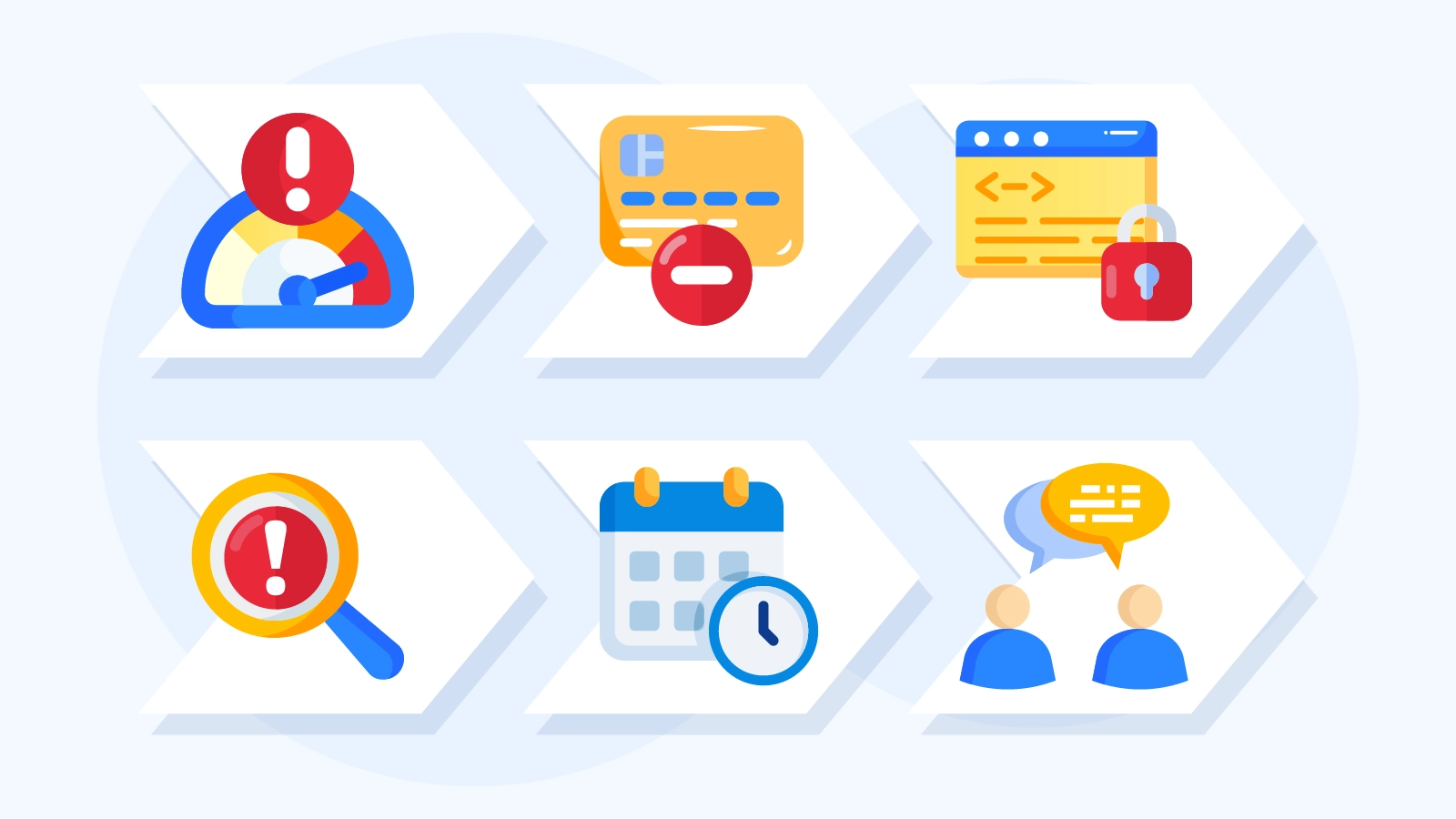
- Set firm limits before you play. We recommend using the responsible gambling tools offered by the casino. You can set deposit or loss limits.
- Remove easy access to money. You can activate gambling blocks with your bank, most banks offer this option. This way, there won’t be any temptation to make a deposit at the casino, and even if there is, you won’t be able to go through with it.
- Use blocking software. There are apps like Gamban that will restrict your access across all your devices. Once the software is installed, you won’t be able to enter any gambling site.
- Identify your triggers. Do you end up gambling out of boredom? Is it stress or alcohol that pushes you to bet? You need to figure out what your reasons are!
- Replace the time you spend gambling. Gambling leaves a gap once you quit. You need to fill that gap with a new hobby. For example, you could start running in the park.
- Talk to someone you trust, a friend or a family member. Unfortunately, secrecy feeds the problem. Find someone you trust and talk openly about what you’re going through. You’ll find that you feel much better afterward.
Professional Treatment Options
Problem gambling can be treated, and the good news is that most forms of support are either completely free or low-cost. There are numerous treatment options, ranging from simple phone calls to structured therapy. The specialists on our team have put together a complete list of the options available to you:
If you’re not sure where to start, counselling and helplines are the simplest step you can take. You’ll speak directly with a trained adviser.
Beyond that, if you need something more structured, cognitive behavioural therapy is an option with proven results. Keep in mind, though, that sessions run over several weeks, and this type of therapy isn’t for everyone, but it’s worth trying.
Gamblers Anonymous takes a different approach. Here you can attend group meetings, free of charge, either in person or online. You’ll hear similar stories, and you’ll be able to share your own too.
For more severe cases, some countries also offer intensive programmes, most of which are funded through national health systems.
There’s one last thing we think is important for you to know. Gambling problems often come hand in hand with other health issues: anxiety, depression, or substance use. We believe effective treatment needs to address more than just the gambling itself.
Recognising the problem is often the hardest part. From this point on, you have real resources available. There are people ready to listen to you. Don’t be afraid, you’re not alone in this process! If you’ve been through this yourself, we’d genuinely like to hear your experience in the comments, it might help someone else who’s reading this.
National Self-Exclusion Systems: One Step, Wide Protection
Self-exclusion lets you block your own access to gambling. The good news is that this system applies nationwide, so you won’t be able to open an account anywhere else. Each country has its own system, but the principle is the same. The CasinoAlpha experts have put together a simple overview for each country:
- GAMSTOP (United Kingdom): This programme is completely free and blocks your access to all online operators licensed in the UK. You choose the duration yourself, starting from 6 months, up to 1 year or 5 years.
- CRUKS (Netherlands): For this programme, you need to register via DigiD, and every operator is required to deny you access.
- Spelpaus (Sweden): Sweden’s programme covers all licensed gambling, so you won’t be able to open new accounts.
- OASIS (Germany): This covers all online games, including sports betting and land-based casinos. All operators are required to check you against the system before allowing you to play.
- ROFUS (Denmark): A single registration will block you from all legal Danish casinos. You can choose either a fixed period or an unlimited term.
- BetStop (Australia): You can opt for self-exclusion starting from 3 months up to a lifetime exclusion.
Once you’ve registered, self-exclusion will take effect quickly, usually within 24 hours. It will remain active for the entire period you’ve chosen, so you won’t be able to open new accounts!
If You’re Worried About Someone Else
Most of the time, supporting someone close to you is difficult. We’ve put together a few things that can help:
- Speak honestly: Choose a calm moment and talk openly. Focus on what you’ve noticed and how you feel, not on reproaches!
- Don’t pay off the addicted person’s debts: If you cover their losses, you’ll be encouraging this habit to continue. Watch out for shared finances and protect them.
- Look for support for yourself too: Most of the helplines listed above also offer support to family members. There’s also Gam-Anon, a group created specifically for friends and family.
- Don’t forget to take care of yourself! Even as you try to convince the person close to you that they need help, you shouldn’t forget about yourself. Taking care of your own wellbeing isn’t a selfish act.
What to Do Today
Honestly complete the self-check above, whether it’s for yourself or on behalf of someone you’re worried about.
- Check the table above and save a helpline number. You never know when you might need it!
- Put a concrete barrier in place too. For example, you could apply a deposit limit or set up blocking software.
- If you feel like gambling has gotten out of control, you can self-exclude using the national programme in your country.
- Talk openly with someone. Choose a person you trust. You don’t have to go through this alone!
Sources
- American Psychiatric Association, DSM-5-TR: Diagnostic Criteria for Gambling Disorder (9 criteria; 4+ within 12 months). https://www.psychiatry.org/patients-families/gambling-disorder/what-is-gambling-disorder
- World Health Organization, ICD-11 / Gambling fact sheet: definition of gambling disorder. https://www.who.int/news-room/fact-sheets/detail/gambling
- The Lancet Public Health (2024), The prevalence of gambling and problematic gambling: a systematic review and meta-analysis. https://www.thelancet.com/journals/lanpub/article/PIIS2468-2667(24)00126-9/fulltext
- [4] National Council on Problem Gambling (US): National Problem Gambling Helpline (1-800-GAMBLER / 1-800-522-4700). https://www.ncpgambling.org/help-treatment/
- GamCare (UK): National Gambling Helpline, 0808 8020 133. https://www.gamcare.org.uk/
- GAMSTOP (UK): online self-exclusion service. https://www.gamstop.co.uk/
- Gambling Helpline New Zealand: 0800 654 655 (and specialist lines). https://gamblinghelpline.co.nz/
- Problem Gambling Foundation of New Zealand: free counselling, 0800 664 262. https://www.pgf.nz/
- ACMA (Australia): BetStop, the National Self-Exclusion Register; and OASIS/Germany overview. https://www.acma.gov.au/betstop-national-self-exclusion-registertm
- Gambling Help Online (Australia): National Gambling Helpline 1800 858 858. https://www.gamblinghelponline.org.au/
- ConnexOntario (Canada): mental health, addiction & problem-gambling support, 1-866-531-2600. https://connexontario.ca/our-services/gambling-treatment/
- Kansspelautoriteit (Netherlands): CRUKS national self-exclusion register. https://www.cruks.nl/
- BeGambleAware (UK) and European support lines / self-exclusion (Spelpaus, ROFUS). https://www.begambleaware.org/
- Gambling Regulatory Authority of Ireland / GamblingCare.ie: Get Help (1800 936 725). https://www.grai.ie/gambling-safety/understand-your-gambling/get-help/
- Find a Helpline: verified gambling helplines by country; Gamblers Anonymous international meetings. https://findahelpline.com/topics/gambling