


New Zealand's 2026 Online Casino Licensing Law Explained

We have paid partnerships with the online casino operators featured on our site. We may also earn commissions when users click on certain links. However, these partnerships do not affect our reviews, recommendations, or analysis. We remain impartial and committed to delivering unbiased gambling content.
Learn moreFor two decades, online casinos in New Zealand operated in a grey area, neither banned nor regulated. 2026 brings a major change. The Online Casino Gambling Act 2026 introduces mandatory licensing. Our team of experts has put together all the information, from the licensing timeline to what happens with the operators you’re currently playing at.
- New Zealand’s Online Gambling Status at a Glance (July 2026)
- From Offshore Grey Area to a Licensed Market: What’s Changing
- DIA’s Role: From Land-Based Oversight to Full Online Licensing
- Tax on Winnings
- Payment Methods for NZ Players
- Player Protections and Where to Get Help
- The Bottom Line for Players
- How We Verified This
New Zealand’s Online Gambling Status at a Glance (July 2026)
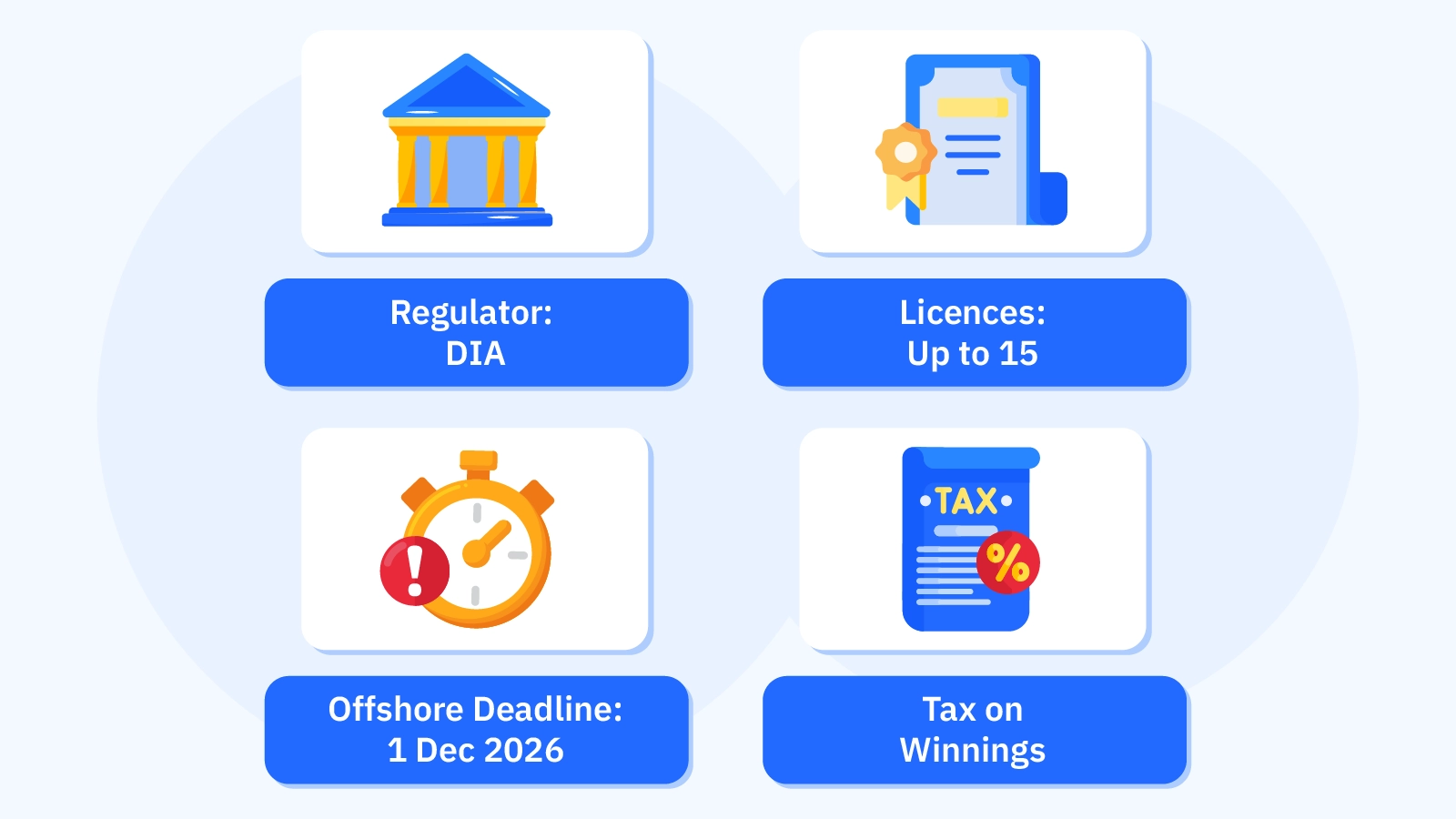
New Zealand’s gambling legislation keeps changing. The CasinoAlpha team has put together a table with the most important information for you:
| Aspect | Where things stand |
|---|---|
| Who regulates it | DIA, under the Gambling Act 2003 and, since 2026, the new law |
| Are online casinos legal? | Not officially. No local licences yet. Offshore sites still work, but only until December 1, 2026 |
| How licensing works | Up to 15 licences, process started July 2026. First licensed casinos should be live by year-end |
| Land-based gambling | Same old rules, nothing new there |
| Tax on winnings | Play for fun, keep your money. Only “business-style” gambling gets taxed |
| Advertising | Offshore, unlicensed operators can’t advertise since May 2026 |
| Player protections (coming soon) | Self-exclusion, deposit limits, no autoplay, no credit card or BNPL deposits |
| Need help? | PGF Services and the Gambling Helpline, free and confidential |
If you’re already playing at an online casino, the most important thing to remember is the December 1, 2026 deadline. After this date, you’ll need to check whether the operator is licensed by DIA. Check back with CasinoAlpha to stay up to date with all the changes.
Are you currently playing at a New Zealand casino? Which one? We’re waiting for your answer in the comments section!
From Offshore Grey Area to a Licensed Market: What’s Changing
New Zealand, under the Gambling Act 2003, licensed exclusively land-based gambling: casinos, gaming machines, lotteries, and the TAB’s betting operations.
At that time, online casino gambling sat completely outside this system, and no New Zealand operator could operate legally. Offshore casinos did exist, however, but there was no licensing mechanism for them. Players who gambled at these casinos found themselves in a grey area, since this wasn’t a safe, licensed activity.
This legislative gap persisted for two decades, and offshore online casino gambling grew significantly during that time. The main reason was that the Gambling Act 2003 was drafted long before online gambling became so popular.
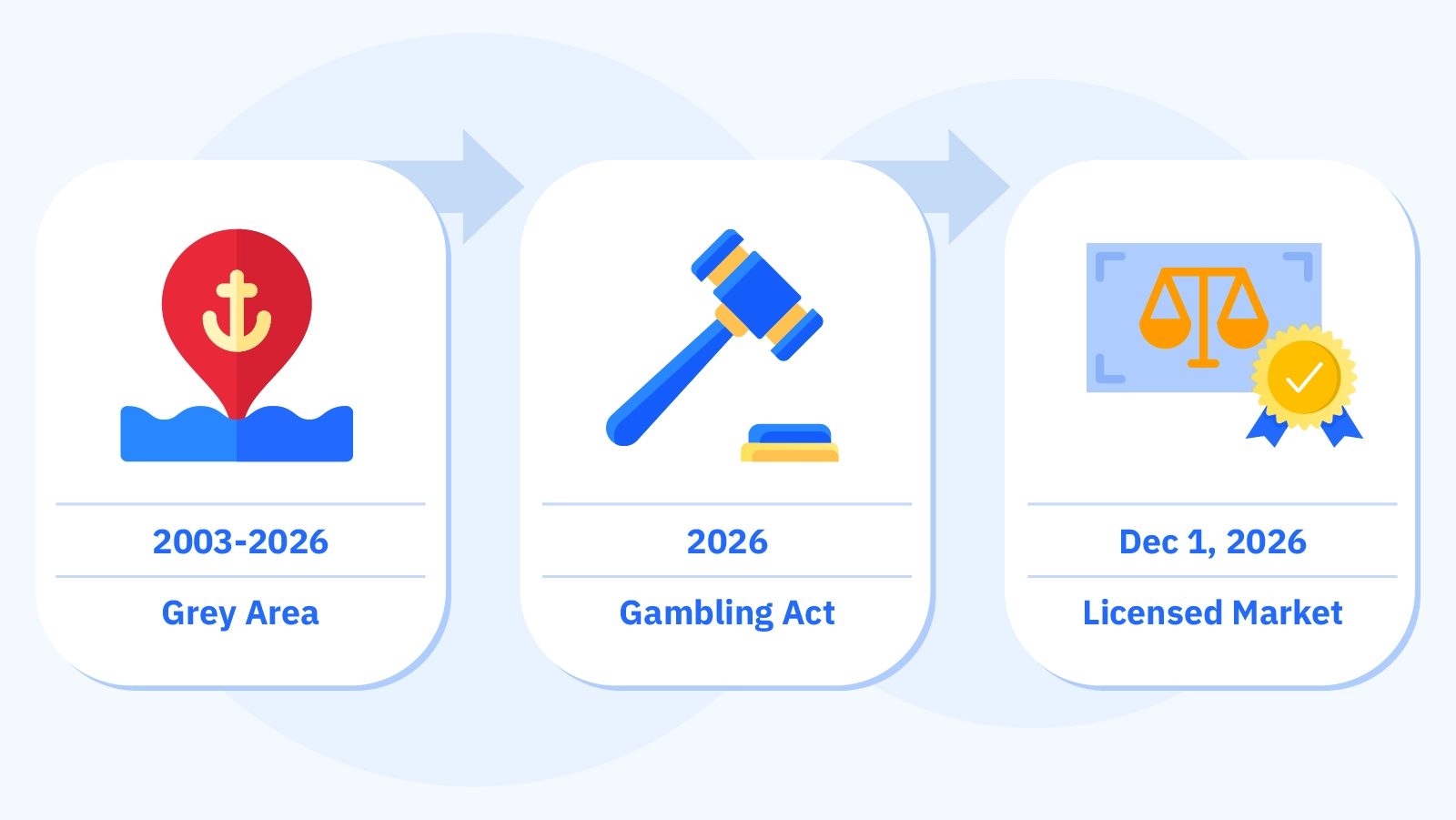
The Online Casino Gambling Act 2026 changes that structure directly.
The law was introduced in Parliament in mid-2025, but only came into force on May 1, 2026. Any casino that allows a person based in New Zealand to play at online casinos must hold a New Zealand licence. DIA will run a competitive licensing process, structured in 3 stages.
The process runs in three stages:
- Expressions of interest in July 2026
- Competitive allocation round in September 2026
- Formal licence applications in October 2026
So July brings the start of an important process, one that will stretch across several months.
Existing offshore operators are not cut off immediately.
They will continue to operate in the New Zealand market, but only until December 1, 2026. After that date, any operator without a valid licence will no longer be allowed to offer online casino services in this country.
Operators who fail to comply with these rules will face:
- Formal warnings
- Take-down notices
- Financial penalties
- Sanctions of up to NZD 300,000
Operators who already have a licence application in progress before the December 1, 2026 deadline will not be excluded, since they’ll be in the process of becoming licensed. DIA grants a grace period in this case, until June 1, 2027.
So, the December 1, 2026 date should be understood as a deadline for submitting the application.
DIA’s Role: From Land-Based Oversight to Full Online Licensing
The Department of Internal Affairs (DIA) administers New Zealand’s gambling sector under the law in force since 2003, the Gambling Act 2003. Its responsibilities include:
- Casino licensing conditions
- Anti-money-laundering enforcement
- Enforcement against illegal gambling
Until now, the Gambling Commission, a fully separate statutory body, handled casino licensing decisions.
That’s about to change: DIA will now manage the entire online casino licensing process. On top of that, the agency is gaining expanded enforcement powers, designed specifically for a market with offshore operators: take-down notices, enforceable undertakings, and the financial penalties described above.
What are licensed operators required to do?
Licensed operators are required to report to DIA on a quarterly basis. The government has set an offshore gambling duty that will rise to 16 percent of gross gambling revenue starting in 2027, up from the previous 12 percent duty.
This duty applies regardless of where the licensed operator is based.
Tax on Winnings
The 2026 reform does not change how gambling winnings are taxed. Recreational winnings, including those from online casino games, remain untaxed in New Zealand. This follows the general principle already applied to gaming-machine proceeds under the Income Tax Act 2007: winnings from games played as a form of entertainment are not taxable.
The exception, unchanged by the new law, applies only to players who engage in gambling activity that’s far more systematic and profit-driven. In that case, the tax authority may treat the activity as a business, and standard income tax rules will apply.
Payment Methods for NZ Players
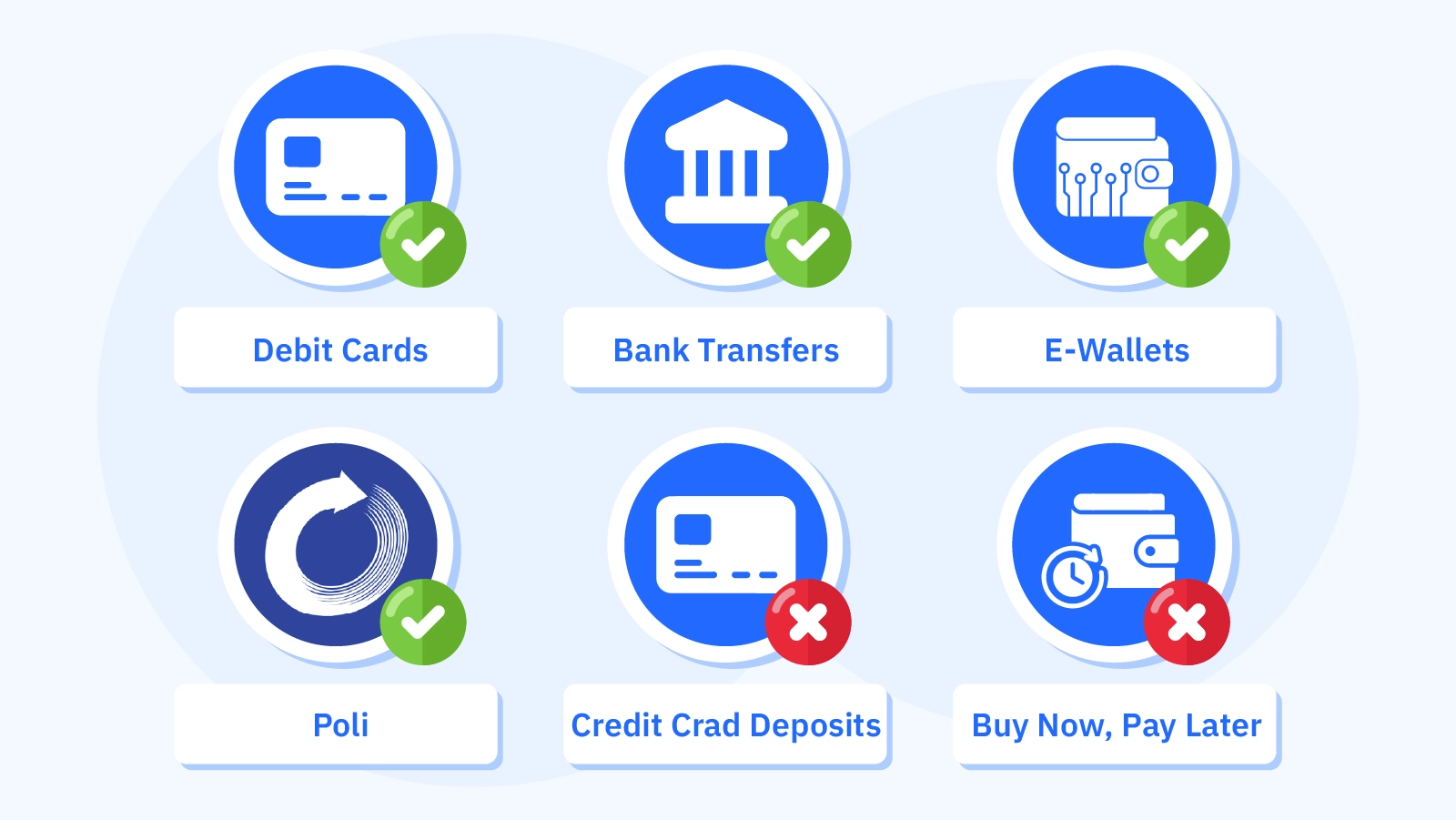
Currently, players in New Zealand can deposit funds via debit cards, bank transfers, and e-wallets (Skrill, Neteller). POLi is a service that lets you make payments directly from your online bank account, without a card. It remains available in New Zealand. POLi’s Australian operation closed in September 2023, when Australia Post exited the business.
Payment options keep shrinking
Payment options will narrow at licensed operators. This doesn’t mean any current method is disappearing, rather, the new law limits how a regulated operator can accept funds.
Starting December 1, 2026, credit card deposits and buy now, pay later services will be gone. These will be completely banned at New Zealand casinos.
New Zealand isn’t the only country where these changes are happening. It’s already a pattern, since funding gambling through credit is considered a higher-risk payment channel. It’s usually one of the first measures a regulatory body imposes.
Player Protections and Where to Get Help
Problem Gambling Foundation NZ operates its services under the name PGF Services. It provides free, confidential counselling across New Zealand for anyone affected by gambling-related problems.
There are up to 18 clinics nationwide, and duty counselors can be reached via live chat, phone, email, or text message. There’s also a national gambling helpline that offers free support.
What does the Online Casino Gambling Act 2026 provide?
This law adds further protections, such as self-exclusion tools, player-set deposit limits, real-time alerts, play breaks, and a ban on the autoplay feature. However, none of these tools replace professional support.
Licensed operators will be required to contribute financially to the harm-minimisation levy, which currently supports Problem Gambling Foundation NZ.
If you feel that gambling is becoming a serious problem, whether for yourself or someone close to you, consider that reason enough to reach out for help early. Don’t wait! Now is the right time for a change.
The Bottom Line for Players
New Zealand is going through the most significant legislative change in the gambling sector. Where licensing previously applied only to land-based casinos, with offshore casinos left in a grey area, there’s now a licensed domestic market, where DIA holds a dual role: authorisation and law enforcement.
This doesn’t change how recreational winnings are taxed. Recreational winnings won’t be taxed any differently, and the payment methods currently in use will remain unchanged.
What will actually change will only bring benefits to players. Only licensed casinos will operate in New Zealand’s gambling market, and there will be more player-protection tools available.
If you want to find out whether an operator is licensed or not, you can check the official licence register published by DIA.
How We Verified This
Our team of specialists reviewed the Department of Internal Affairs’ official page on the implementation of online gambling regulations and compared the Online Casino Gambling Act 2026 timeline against legal information published by New Zealand law firms. We also checked specialist regulatory press coverage and the tax treatment of winnings.
We didn’t stop there! We also verified POLi’s current operating status in New Zealand, directly from the service’s official information. We didn’t just rely on old reports, we checked it ourselves!
A Final Word on Responsible Gambling
Responsible gambling: gambling is entertainment, not a source of income, and it carries real financial and personal risk. Never gamble with money you cannot afford to lose, and treat any warning signs of harm as a reason to seek support, not to keep playing.
This article is for general informational purposes only and does not constitute legal, financial, or professional advice. Laws and licensing timelines referenced here can change; readers should confirm current requirements directly with the Department of Internal Affairs before relying on them.
F.A.Q.
Is online casino gambling legal in New Zealand right now?
New Zealand is currently in a transitional stage. No licence has been issued yet for an online casino in New Zealand, and offshore operators are still permitted. This will change once DIA grants the first licences.
When will licensed New Zealand online casinos exist?
There will be 15 licensed casinos, chosen through a competitive process run by DIA. The process opened in July 2026, and the licences will be awarded by the end of the year. From that same point on, offshore operators will be required to stop operating in New Zealand.
Do I have to pay tax on online casino winnings in New Zealand?
No, if you play recreationally. Winnings from gambling played as a form of entertainment remain outside New Zealand’s income tax rules. However, if you gamble systematically, and it already resembles a business, you will be taxed.
Is POLi still available to New Zealand players?
Yes, even though its Australian division closed in 2023, the New Zealand operation was sold to Merco and has continued to operate.
Where can I get help for problem gambling in New Zealand?
Problem Gambling Foundation NZ (PGF Services) offers free, confidential counselling nationwide. You’ll find all the support you need there. In addition, the Gambling Helpline is the national support line.